Miso Soup
This classic Japanese Miso Soup warms body and soul with its umami-rich broth, tender tofu, and the fresh aroma of spring onions. A simple yet profound dish, perfect as an appetizer or light breakfast.

Published on: · Last updated:
Introduction
Miso soup, a cornerstone of Japanese cuisine, is far more than just a simple broth. It is a symbol of warmth, comfort, and the profound simplicity that makes Asian dishes so special. Originally conceived as a nutritious breakfast for samurai warriors, this umami-rich soup has evolved into an indispensable part of daily meals in Japan. Its preparation is an art in itself, based on the perfect balance of dashi broth, miso paste, and delicate additions. It warms not only the body but also the soul, offering a gentle start to the day or a light, satisfying meal at any time. Miso soup is a wonderful example of how a few, high-quality ingredients can come together to create a dish of such depth and elegance.
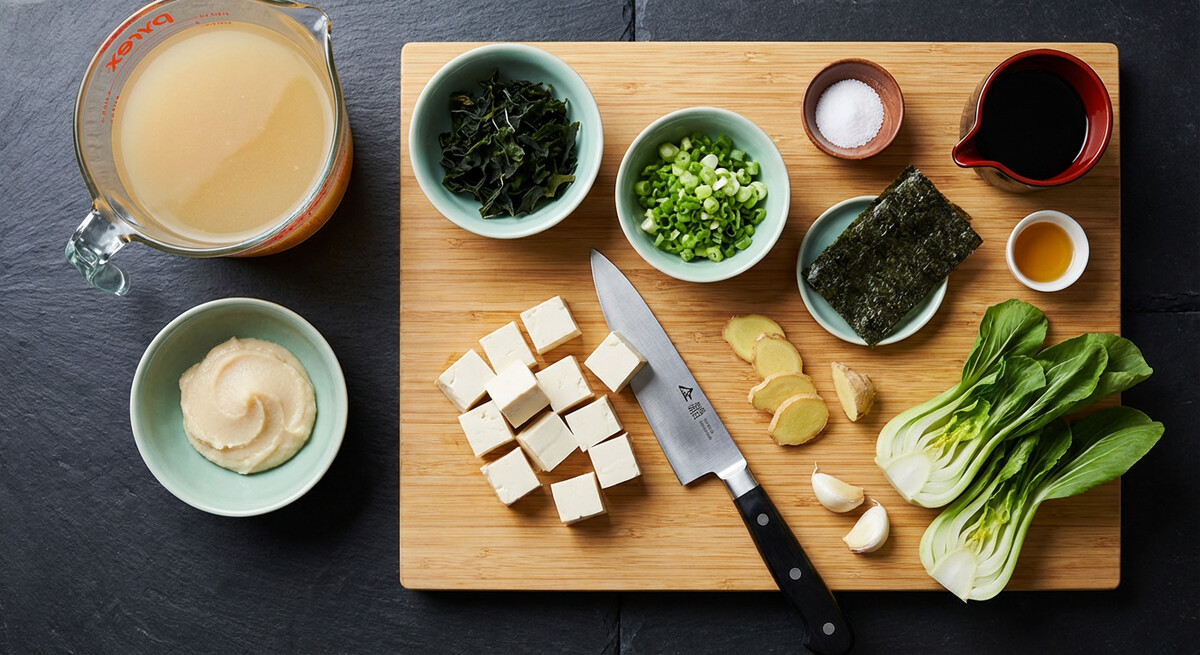
Ingredients
- 600 ml Dashi broth
- 2 EL White miso paste
- 150 g Silken tofu
- 1 EL Dried wakame seaweed
- 1 Stange Spring onion
- 1 Prise Salt
- 1 Spritzer Soy sauce
- 1/2 Blatt Nori seaweed (optional)
- 1/2 TL Sesame oil (optional)
Instructions
- Gently heat the dashi broth in a medium saucepan over medium heat until it is just about to simmer. Be careful not to let the broth boil, as this can diminish its delicate flavors.
- Add the dried wakame seaweed directly to the warm dashi broth. Allow the seaweed to soak for about 2 minutes to rehydrate and soften.
- In a small ladle or bowl, whisk some of the warm dashi broth with the miso paste until the paste is completely dissolved and no lumps remain. This prevents the miso paste from clumping directly in the broth.
- Slowly stir the dissolved miso paste into the pot with the dashi broth. Immediately remove the pot from the heat as miso soup should not boil once the paste has been added.
- Gently add the cubed silken tofu pieces to the soup and let them warm through briefly. Do not boil the tofu.
- Divide the miso soup into two serving bowls. Garnish each portion with the thinly sliced spring onion rings.
- Optionally, you may add a dash of soy sauce or season with a pinch of salt if desired, to enhance the flavor. Serve hot immediately, perhaps drizzled with a little sesame oil and topped with strips of nori seaweed.
Nutrition
Tips & Variations
- Use red miso for a bolder flavor or a blend of light and dark varieties.
- Prepare the dashi broth in advance and store it in the refrigerator.
- Never boil miso soup after the miso paste has been added to preserve its flavor.
- Serve miso soup traditionally as an appetizer or light breakfast with rice.
- For a vegan option, use kombu dashi and ensure your miso paste is vegan.
Frequently Asked Questions
- What type of tofu is best for miso soup?
- Silken tofu is ideal for miso soup due to its delicate texture, which blends well with the soft soup. Firmer tofu can also be used if you prefer more bite.
- Can I reheat miso soup?
- Yes, you can carefully reheat miso soup. Warm it slowly over low heat and do not let it boil, as this can negatively impact the flavor of the miso paste.
- How should I store leftover miso soup?
- Store leftover miso soup in an airtight container in the refrigerator. It will keep for 2-3 days. It's best to add fresh spring onions when serving the reheated soup.
- Are there alternatives to wakame seaweed in miso soup?
- Yes, finely cut dried nori sheets can be a good alternative. You can also use other softer types of seaweed or omit it entirely if you don't care for it.