Hummus
Creamy and authentic hummus, perfect as a dip or spread. A classic of Arabic cuisine, easy to prepare and full of flavor.

Published on: · Last updated:
Introduction
The fascinating history of hummus stretches back thousands of years, deeply rooted in the culinary landscape of the Middle East. Once a staple for countless generations, this creamy chickpea paste is now globally beloved and a firm fixture in many cuisines. Originally made from humble ingredients like chickpeas, tahini, lemon, and garlic, hummus has evolved into a versatile dip and spread that is both nutritious and incredibly flavourful. Its simplicity is the secret to its widespread appeal: in just a few easy steps, you can create a dish rich in protein and fiber. Whether as an accompaniment to warm flatbread, as the centerpiece of a mezze platter, or as a healthy addition to vegetable sticks, hummus elevates any meal and brings a touch of oriental tradition to your table.
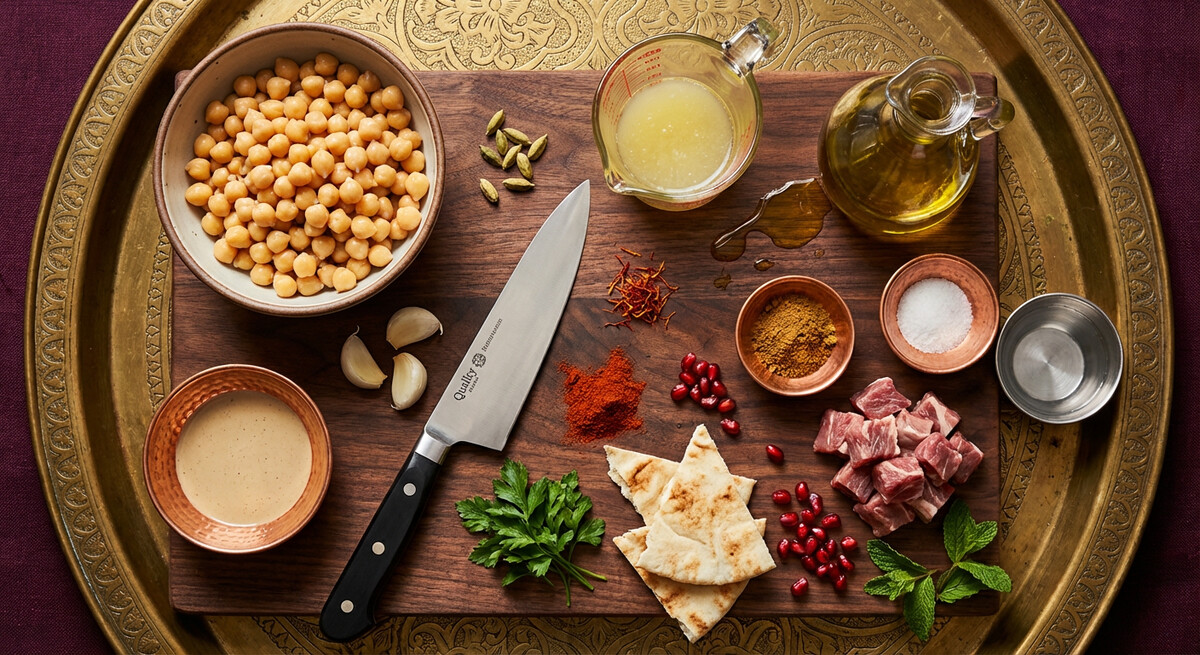
Ingredients
- 400g Canned chickpeas, rinsed and drained
- 3 EL Tahini (sesame paste)
- 2uadlt;subgt;1/2 Garlic cloves, peeled
- 1 Lemon, juiced
- 4 EL Extra virgin olive oil, plus more for drizzling
- 1 TL Ground cumin
- 1/2 TL Salt, or to taste
- 1/4 TL Cold cayenne pepper (optional)
- 2 EL Water, ice cold (for texture)
- Paprika powder for garnish
- Fresh parsley, chopped, for garnish
- Flatbread for serving
Instructions
- Place the rinsed and drained chickpeas in a high-speed blender or food processor. Add tahini, garlic cloves, lemon juice, ground cumin, salt, and optional cayenne pepper. Blend for about 30 seconds until a coarse paste forms.
- With the machine running, gradually stream in the olive oil until the mixture begins to thicken. Continue blending for about 1 minute.
- Gradually add the ice-cold water, one tablespoon at a time, while blending, until the hummus reaches your desired light and creamy consistency. Scrape down the sides of the blender bowl as needed to ensure even mixing. Blend for another 1-2 minutes.
- Taste the hummus and adjust seasoning as needed, adding more salt, lemon juice, or cumin if desired, and blend briefly. Be careful not to over-blend, maintaining a pleasant texture.
- Spoon the finished hummus into a serving bowl. Use a spoon to create a decorative swirl on the surface. Drizzle generously with additional extra virgin olive oil.
- Garnish the hummus with a sprinkle of paprika powder and fresh chopped parsley. Let the flavors meld for about 5-10 minutes before serving.
- Serve the hummus with warm, fresh flatbread. It can also be served with vegetable sticks such as cucumber, carrots, or bell peppers.
Nutrition
Tips & Variations
- For a smoky flavour, use roasted chickpeas or add a pinch of smoked paprika.
- Prepare hummus up to three days in advance and store it airtight in the refrigerator.
- Too much liquid makes hummus watery; add cold water gradually for the perfect consistency.
- Serve hummus with fresh vegetables, falafel, or as a spread in sandwiches.
- Substitute chickpeas with cannellini beans for a milder, creamier white bean dip.
- For a spicy kick, add a pinch of chili flakes or a swirl of harissa.
Frequently Asked Questions
- How do I make my hummus extra creamy?
- For exceptionally creamy hummus, remove the chickpea skins. Alternatively, boil the chickpeas for about 10 minutes with a pinch of baking soda to make them even softer.
- Can I freeze hummus?
- Yes, hummus freezes well! Transfer it to an airtight container and cover the surface with a thin layer of olive oil to prevent drying. Thaw overnight in the refrigerator.
- Which type of tahini is best for hummus?
- Choose a light, runny tahini without a bitter aftertaste. Tahini from Ethiopia or Lebanon is often considered particularly high quality.
- Why is my hummus bitter?
- Bitterness can result from too much or low-quality tahini. Garlic, if added in excess, can also contribute a bitter note. Always taste your tahini beforehand.